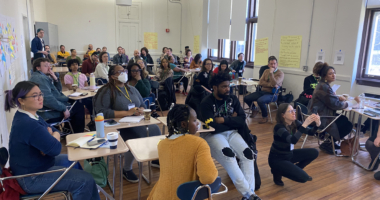
At this year’s teaching artist staff retreat, CWP teaching artists Emma B.B. Doyle and Adriana Guzmán led a workshop on the intersections of puppetry and inclusive teaching practices.
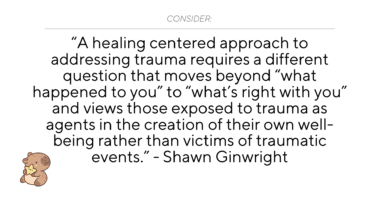
They shared with the teaching artist staff the myriad ways in which puppets can benefit students on the autism spectrum – by delivering information without the normal pressures of human interaction – and how they can be a trauma-informed tool that allow students to have distance from an experience, while addressing it through the use of character.
As Emma shared, “puppets can liberate us all from our roles – potentially making for generative conversations that are impossible with the baggage of our power dynamics, histories, biases, and classroom hierarchies.”
This fall, CWP teaching artists are now implementing this professional development in two puppetry residences. The first, led by visual artist Emma B.B. Doyle and writer Libby Mislan, is at Quest 2 Learn, a middle school in the Chelsea neighborhood that is housed in the historic Textile High School building.
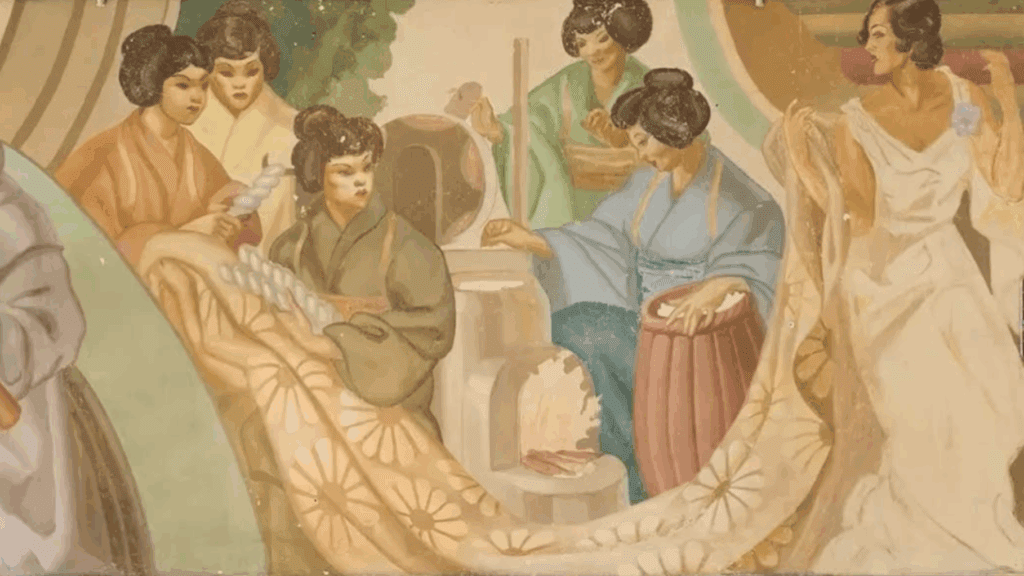
The building is home to many murals created in the 1930s as part of Franklin D. Roosevelt’s New Deal initiative, and the intention behind the residency is to use the school’s murals to spark inspiration for a puppet show.
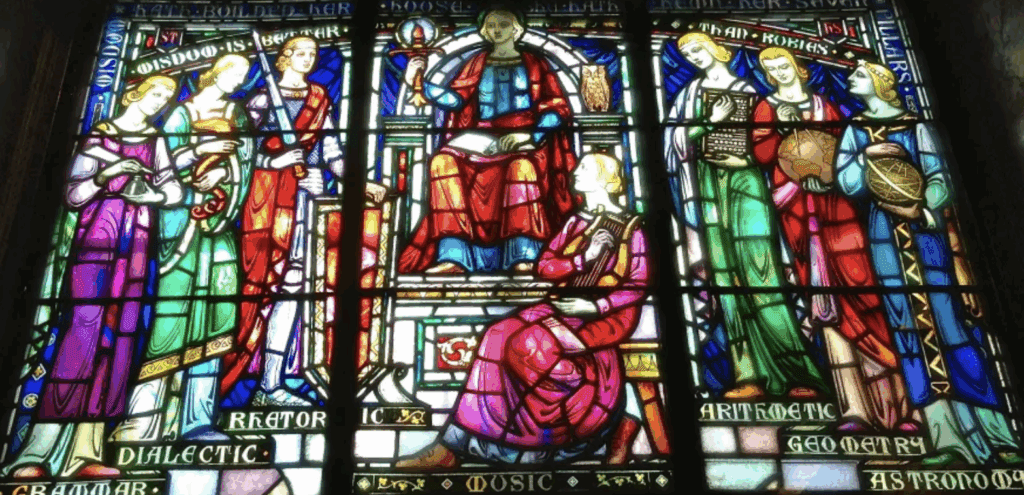
Students have toured the building and interpreted the murals, which span a wide spectrum of themes, including the origins of textiles, a celebration of global civilizations, and the origins of the modern education system as traced back to ancient Greek society.
Using the theme of “origin stories,” and asking the question “how did we get here?” students are now hard at work concepting their own plays in preparation for the puppet-making process. As the residency is taking place in an ENL classroom, one 7th grade class has chosen to interpret the guiding question to tell a migration story about a fictional character they collectively developed, María, a mother migrating to the United States with her own mother and two children.
The intention is that the use of puppets will give students distance from their personal stories, while allowing them to process and normalize their own experiences as newcomers.
In the second puppetry residency, at The Young Women’s Leadership School in the Bronx (TYWLS B) visual artist Jordany Genao and writer Libby Mislan are engaging middle school students in a play-making and puppetry process around the theme of “finding your voice.”
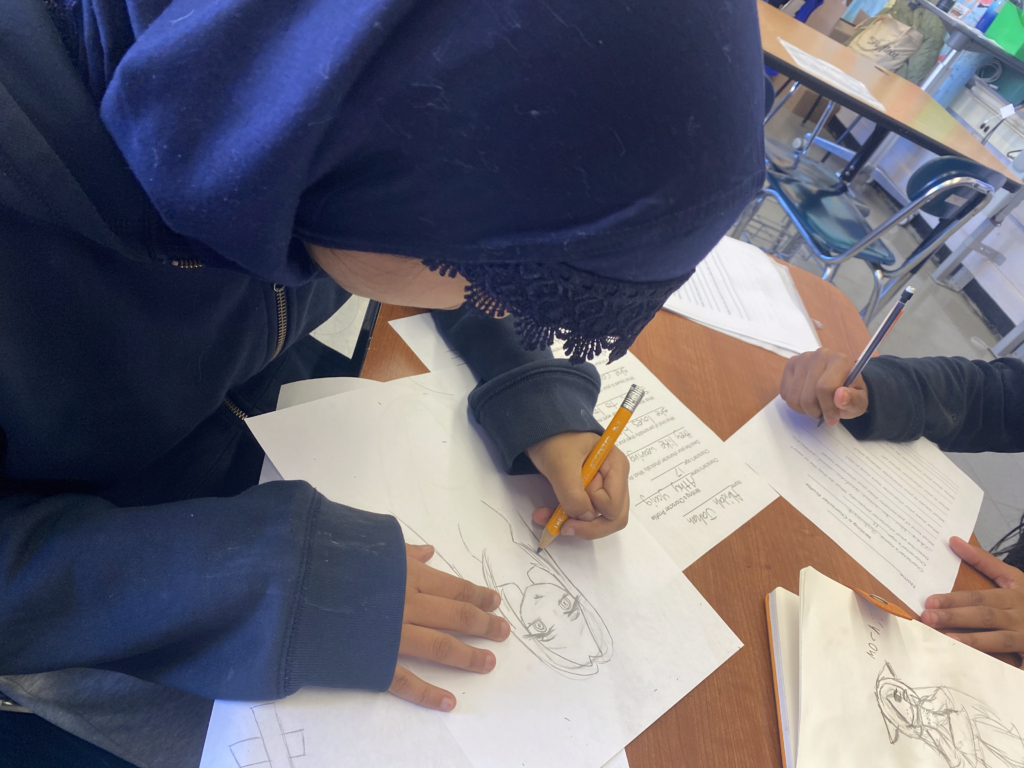
The students have been engaged in a discussion around what it means to find your voice, and how one often finds their voice in response to a challenge. Students have brainstormed social issues affecting their lives, and are now working in small groups to develop a fictional character who is dealing with a relevant issue, and must work through a challenge in order to find their voice. Many students are choosing to work through issues around friendship, rumors, bullying, and fitting in, and the intention, through the play-writing process, is for students to foster healthy communication and deeper empathy through the creation of characters who act with integrity.
Stay tuned as these projects develop throughout the winter and spring, and transform into full-scale puppetry productions!