“I am reminded that resilience is all around us.” – Alia Shaukat, TAP Trainee
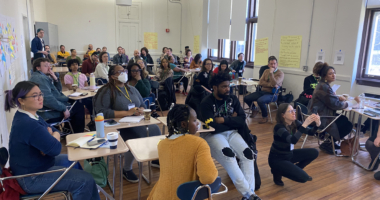
In late March, our Teaching Artist Project cohort gathered for an elective on Healing-Centered Facilitation, graciously led by Dale Novella and Adriana Guzmán.
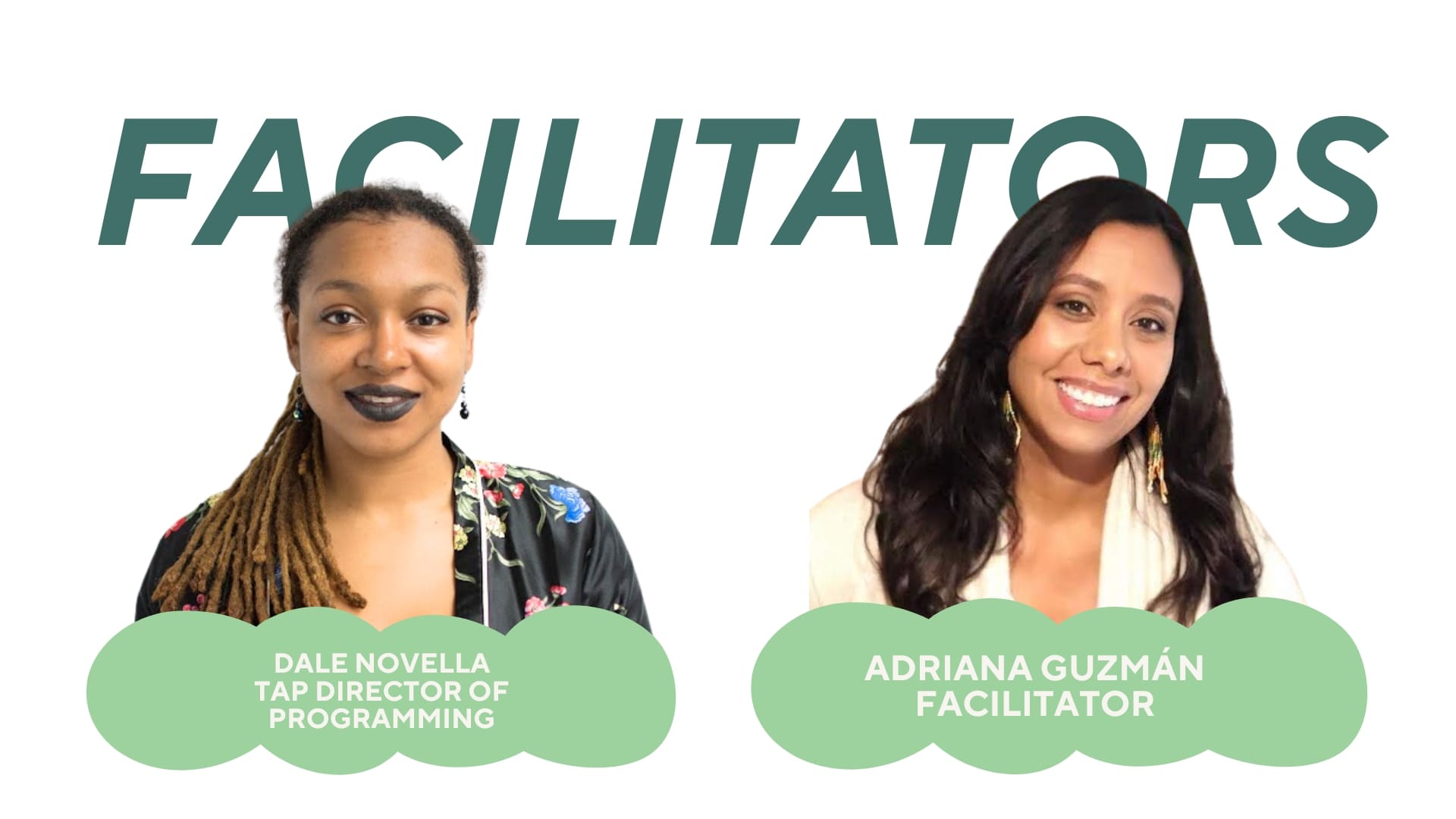
As TAP trainees trickled in, Dale and Adriana invited us to share songs that make us feel hopeful, immediately easing us into a welcoming space. I felt peaceful, smiling at my peer’s responses and sharing my own –– Labi Siffre’s 1972 song, “Cannock Chase” –– a song centered around resilience.
After engaging with one another and carving out time for community building, we moved on to the expertise of Shawn Ginwright. Ginwright, a Harvard professor and leading voice on healing and social change, coined a healing-centered philosophy which “offers an asset-driven approach aimed at the holistic restoration of young people’ s well-being.” Even further, healing-centered approaches encourage us to consider that “people are not harmed in a vacuum, and well-being comes from participating in transforming the root causes of the harm within institutions.”
In Ginwright’s 2018 article, he details his journey moving from trauma-informed facilitation to healing-centered facilitation, particularly highlighting his experience leading a group of African American young men in a healing circle earlier in his career. During this healing circle, one of the participants pushed back on how Ginwright was facilitating, instead emphasizing that trauma should not, and will not, define their personhood. From this, Ginwright’s universe expanded.
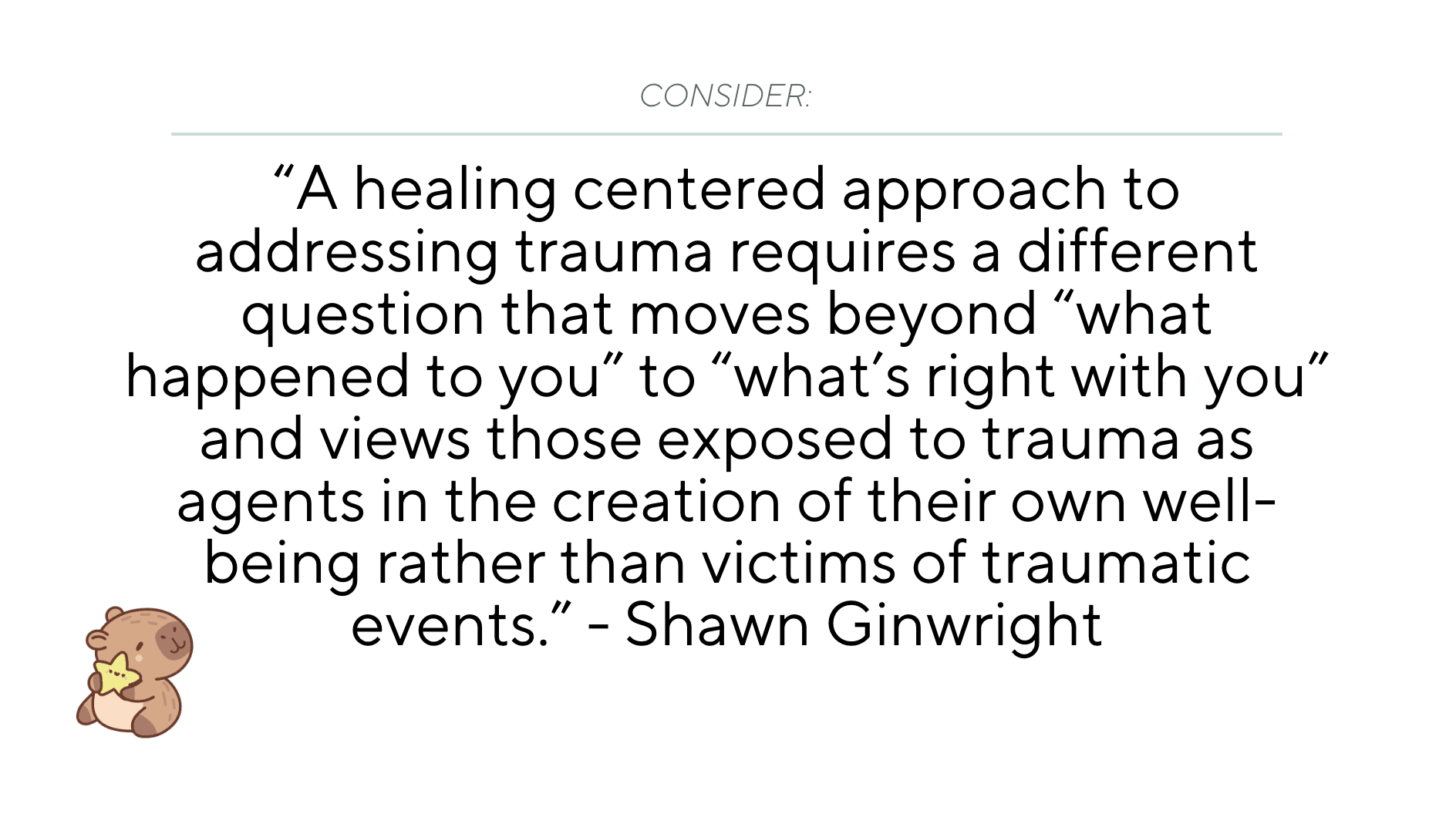
As we were reading this article, our cohort started to uncover the importance of ensuring that students see themselves beyond ‘the worst thing that ever happened to them,’ especially within marginalized communities. By highlighting knowledge, skills, curiosity, empathy, and a plethora of other traits, the possibilities are endless. Healing is a process that inherently feeds from positivity.
Further, Ginwright writes that well-being is not only an individual process, but also a collective one –– and how we must dedicate ourselves to transforming the institutional barriers that lead to these traumas in the first place. I have always been interested in wellness, even exploring the healing arts, but always felt a type of dissonance when modern wellness is often painted as ‘green juice and pilates’ rather than community engagement. Reading Ginwright’s article encouraged me to continue to pave a community-based path, asserting that healing centered philosophies need to be culturally and politically centered.
We then spent time understanding what this philosophy would look like in action, creating mock activities in small groups, then sharing those activities alongside our lived experiences as a whole. As our elective wrapped up, I started to realize that I had had the lyrics of my opening song choice repeating in my head throughout the session: I’ve been down for oh so long / It seemed like my soul was dead and gone / But it’s alright / I’m back in the fight.
This elective transcended the bounds of facilitation, instead imploring all of us to consider on a personal level: who we are, where we come from, and how we grow from there. After this session, I am reminded that resilience is all around us.
Post by Alia Shaukat, Teaching Artists Project Trainee, 2025-2026